01 जून, 2016

The Aga Khan Palace ,PUNE


The Aga Khan Palace was built by Sultan Muhammed Shah Aga Khan III in Pune, India. Built in 1892, it is one of the biggest landmarks in Indian history. The palace was an act of charity by the Sultan who wanted to help the poor in the neighboring areas of Pune, who were drastically hit by famine.


 Aga Khan Palace is a majestic building and is considered to be one of the greatest marvels of India. The palace is closely linked to the Indian freedom movement as it served as a prison for Mahatma Gandhi, his wife Kasturba Gandhi, his secretary Mahadev Desai and Sarojini Naidu. It is also the place where Kasturba Gandhi and Mahadev Desai died. In 2003, Archaeological Survey of India (ASI) declared the place as a monument of national importance.

The Aga Khan Palace
The Agakhan Palace, Pune, is a National Monument of India’s freedom movement. Following the launch of Quit India Movement in 1942, Gandhiji, Kasturba, Mahadevbhai Desai, Sarojini Naidu and other national leaders were intended at the Agakhan Palace from August 5, 1942 to May 6, 1944. Mahadevbhai & Kasturba passed away while in captivity at the Agakhan Palace and their samadhis are located in the campus.


The Agakhan Palace has developed into a National and International place of Pilgrimiga, with over a lakh a visitors every year, who come to pay their homage to the Samadhis.
After the sad demise of Kasturba, Gandhi had expressed a wish that this place should develop into a place of Emancipation of Women. On the occassion of Gandhi Birth Centenary in 1969, H. H. Prince Karim Agakhan donated this Agakhan Palace to the nation, as a mark of respect to Gandhiji and his philosophy.


On August 15, 1972, a Gandhi Museum cum Picture Gallery was inaugurated at The Agakhan Palace. In 1980, the management of the museum, samadhis and the palace campus was transferred to Gandhi National Memorial Society by Gandhi Smarak Nidhi, New Delhi. As a tribute to the memory of Kasturba a National Institute for the development of women was established in 1980 where the main emphasis is on Empowerment of women through training and development.

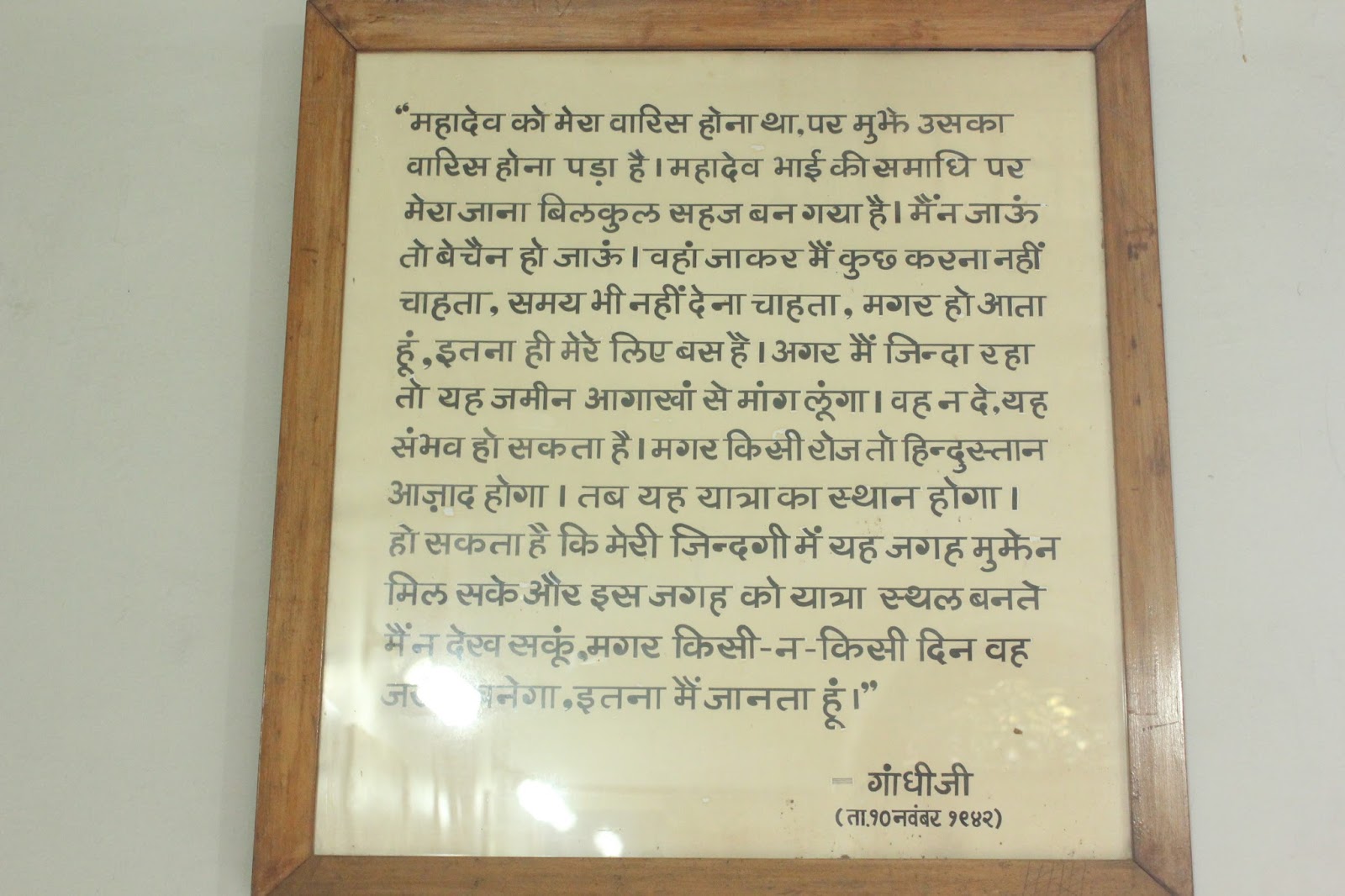


The Gandhi National Memorial Society has been trying to make this place a Living Memorial to Ba & Bapu by organising a number of activities throughout the year.
Agakhan Palace,
Nagar Road
Pune – 411006, Maharashtra, India 
Tel – 91-20-2668 0250
Fax – 91-20-2661 2700
Email: gandhi_memorial@vsnl.net

31 मई, 2016

NDA, Pune


The National Defence Academy (NDA) is the Joint Services academy of the Indian Armed Forces, where cadets of the three services, the Army, the Navy and the Air Force train together before they go on to pre-commissioning training in their respective service academies. The NDA is located at Khadakwasla near PuneMaharashtra. It is the first tri-service academy in the world.
NDA alumni have led and fought in every major conflict in which the Indian Armed Forces has been called to action since the academy was established. The alumni include 3 Param Vir Chakra recipients and 9 Ashoka Chakra recipients. National Defence Academy has produced 27 service Chiefs Of Staff till date. Current Chiefs Of Staff of the Army, the Navy and the Air Force are all NDA alumni.[2]

The NDA campus is located about 17 km south-west of Pune city, north-west of Khadakwasla Lake. It spans 7,015 acres (28.39 km2) of the 8,022 acres (32.46 km2) donated by the Government of the former Bombay State. The site was chosen for being on a lake shore, the suitability of the neighboring hilly terrain, proximity to the Arabian Sea and other military establishments, an operational air base nearby at Lohegaon as well as the salubrious climate. The existence of an old combined-forces training centre and a disused mock landing ship, HMS Angostura, on the north bank of the Khadakwasla lake which had been used to train troops for amphibious landings, lent additional leverage for the selection of the site.[3] Aptly, NDA is also located in the hunting grounds of the legendary Shivaji, with the Sinhagad Fort as a panoramic backdrop.
The administrative headquarters of the NDA was named the Sudan Block, in honour of the sacrifices of Indian soldiers in the Sudan theatre during the East African Campaign. It was inaugurated by then Ambassador of Sudan to India, Rahmatullah Abdulla, on 30 May 1959. The building is a 3-storey basalt and granite structure constructed with Jodhpur red sandstone. Its architecture features an exterior design comprising a blend of arches, pillars and verandahs, topped by a dome. The foyer has white Italian marble flooring and panelling on the interior walls. On the walls of the foyer hang the portraits of NDA graduates who have been honored with the highest gallantry awards, the Param Vir Chakra or the Ashoka Chakra.
A number of war relics adorn the NDA campus, including legendary captured tanks and aircraft.[8] The Vyas Library offers an extensive collection of over 100,000 printed volumes, in addition to numerous electronic subscriptions and a number of periodicals and journals from around the world in at least 10 languages.

शमी वृक्ष


शमी वृक्ष (अंग्रेज़ी:Prosopis cineraria) को हिन्दू धर्म में बड़ा ही पवित्र माना गया है। भारतीय परंपरा में 'विजयादशमी' पर शमी पूजन का पौराणिक महत्व रहा है। राजस्थान में शमी वृक्ष को 'खेजड़ी' के नाम से जाना जाता है। यह मूलतः रेगिस्तान में पाया जाने वाला वृक्ष है, जो थार मरुस्थल एवं अन्य स्थानों पर भी पाया जाता है। अंग्रेज़ी में शमी वृक्ष प्रोसोपिस सिनेरेरिया के नाम से जाना जाता है।

संरचना

शमी वृक्ष के संदर्भ में कई पौराणिक कथाओं का आधार विद्यमान है। यज्ञ परंपरा में भी शमी के पत्तों का हवन गुणकारी माना गया है। शमी का वृक्ष आठ से दस मीटर तक ऊंचा होता है। शाखाओं पर कांटे होते हैं। इसकी पत्तियां द्विपक्षवत होती हैं। शमी के फूल छोटे पीताभ रंग के होते हैं। प्रौढ पत्तियों का रंग राख जैसा होता है, इसीलिए इसकी प्रजाति का नाम 'सिनरेरिया' रखा गया है अर्थात 'राख जैसा'।

महत्त्व

हिन्दू धर्म में शमी वृक्ष से जुड़ी कई मान्यताएँ है, जैसे-
  • विजयादशमी या दशहरे के दिन शमी के वृक्ष की पूजा करने की प्रथा है। मान्यता है कि यह भगवान श्री राम का प्रिय वृक्ष था औरलंका पर आक्रमण से पहले उन्होंने शमी वृक्ष की पूजा करके उससे विजयी होने का आशीर्वाद प्राप्त किया था। आज भी कई स्थानों पर 'रावण दहन' के बाद घर लौटते समय शमी के पत्ते स्वर्ण के प्रतीक के रूप में एक दूसरे को बाँटने की प्रथा हैं, इसके साथ ही कार्यों में सफलता मिलने कि कामना की जाती है।[1]
  • शमी वृक्ष का वर्णन महाभारत काल में भी मिलता है। अपने 12 वर्ष के वनवास के बाद एक साल के अज्ञातवास में पांडवों ने अपने सारे अस्त्र शस्त्र इसी पेड़ पर छुपाये थे, जिसमें अर्जुन का गांडीव धनुष भी था। कुरुक्षेत्र में कौरवों के साथ युद्ध के लिये जाने से पहले भी पांडवों ने शमी के वृक्ष की पूजा की थी और उससे शक्ति और विजय प्राप्ति की कामना की थी। तभी से यह माना जाने लगा है कि जो भी इस वृक्ष कि पूजा करता है उसे शक्ति और विजय प्राप्त होती है।
शमी शमयते पापम् शमी शत्रुविनाशिनी ।
अर्जुनस्य धनुर्धारी रामस्य प्रियदर्शिनी ॥
करिष्यमाणयात्राया यथाकालम् सुखम् मया ।
तत्रनिर्विघ्नकर्त्रीत्वं भव श्रीरामपूजिता ॥
अर्थात "हे शमी, आप पापों का क्षय करने वाले और दुश्मनों को पराजित करने वाले हैं। आप अर्जुन का धनुष धारण करने वाले हैं और श्री राम को प्रिय हैं। जिस तरह श्री राम ने आपकी पूजा की मैं भी करता हूँ। मेरी विजय के रास्ते में आने वाली सभी बाधाओं से दूर कर के उसे सुखमय बना दीजिये।

अन्य विशेष तथ्य

  • अन्य कथा के अनुसार कवि कालिदास ने शमी के वृक्ष के नीचे बैठ कर तपस्या करके ही ज्ञान की प्राप्ति की थी।
  • शमी वृक्ष की लकड़ी यज्ञ की समिधा के लिए पवित्र मानी जाती है। शनिवार को शमी की समिधा का विशेष महत्त्व है। शनि देव को शान्त रखने के लिये भी शमी की पूजा की जाती है।
  • शमी को गणेश जी का भी प्रिय वृक्ष माना जाता है और इसकी पत्तियाँ गणेश जी की पूजा में भी चढ़ाई जाती हैं।
  • बिहारझारखण्ड और आसपास के कई राज्यों में भी इस वृक्ष को पूजा जाता है। यह लगभग हर घर के दरवाज़े के दाहिनी ओर लगा देखा जा सकता है। किसी भी काम पर जाने से पहले इसके दर्शन को शुभ मना जाता है।
  • राजस्थान के विश्नोई समुदाय के लोग शमी वृक्ष को अमूल्य मानते हैं।
  • ऋग्वेद के अनुसार शमी के पेड़ में आग पैदा करने कि क्षमता होती है और ऋग्वेद की ही एक कथा के अनुसार आदिम काल में सबसे पहली बार पुरुओं[2] ने शमी और पीपल की टहनियों को रगड़ कर ही आग पैदा की थी।
  • कवियों और लेखकों के लिये शमी बड़ा महत्व रखता है। हिन्दू धर्म में भगवान चित्रगुप्त को शब्दों और लेखनी का देवता माना जाता है और शब्द-साधक यम-द्वितीया[3] को यथा-संभव शमी के पेड़ के नीचे उसकी पत्तियों से उनकी पूजा करते हैं।

25 मई, 2016

Firaq Gorakhpuri


Firaq Gorakhpuri's real name was Raghupati Sahay. He was born in 1896 in Gorakhpur, India. He left his imprint on three important genres of Urdu poetry - ghazal, nazm and rubaayee. He wrote more than 40,000 couplets. He was a poet of love and beauty. His poems are published in three anthologies - Rooh-o-Qaayanat, Gul-e-Ra'naa, Nagma-numaa. He passed away in 1982.


He was selected for the Provincial Civil Service (P.C.S.) and the Indian Civil Service (I.C.S.), but he resigned to follow Mahatma Gandhi's Non-cooperation movement, for which he went to jail. Later, he joined Allahabad University as a lecturer in English literature. It was there that he wrote most of his Urdu poetry, including his magnum opus Gul-e-Naghma which earned him the highest literary award of India, the Jnanpith Award, and also the 1960 Sahitya Akademi Award in Urdu. During his life, he was given the positions of Research Professor at the University Grants Commission and Producer Emeritus by All India Radio. After a long illness, he died on 3 March 1982, in New Delhi.
As a distinguished poet, Firaq Gorakhpuri was well-versed in all traditional metrical forms such as ghazalnazmrubaai and qat'aa. He was a prolific writer, having written more than a dozen volumes of Urdu poetry, a half dozen of Urdu prose, several volumes on literary themes in Hindi, as well as four volumes of English prose on literary and cultural subjects.
His biography, Firaq Gorakhpuri: The Poet of Pain & Ecstasy, written by his nephew Ajai Mansingh will be published by Roli Books in 2015.[The book included anecdotes from his life and translations of some of his best work.

ये तो नहीं कि ग़म नहीं
हाँ! मेरी आँख नम नहीं 

तुम भी तो तुम नहीं हो आज 
हम भी तो आज हम नहीं 

अब न खुशी की है खुशी
ग़म भी अब तो ग़म नहीं 

मेरी नशिस्त है ज़मीं 
खुल्द नहीं इरम नहीं 

क़ीमत-ए-हुस्न दो जहाँ 
कोई बड़ी रक़म नहीं 

लेते हैं मोल दो जहाँ 
दाम नहीं दिरम नहीं

सोम-ओ-सलात से फ़िराक़ 
मेरे गुनाह कम नहीं 

मौत अगरचे मौत है
मौत से ज़ीस्त कम नहीं


30 दिसंबर, 2013

Sankat Mochan Hanuman Temple


Sankat Mochan Hanuman Temple is one of the sacred temples of Hindu god Hanuman in the city of Varanasi, Uttar Pradesh, India. It is situated by the Assi river, on the way to the Durga and New Vishwanath temples within the Banaras Hindu University campus. Sankat Mochan in Hindi means reliever from troubles.[citation needed] The current temple structure was built in early 1900s by the educationist and freedom fighter, Pandit Madan Mohan Malviya, the founder Banaras Hindu University. Hanuman Jayanti, the birthday of Hanuman, is celebrated in fanfare, during which a special shobha yatra, a procession starting from Durgakund adjacent to the historic Durga temple to Sankat Mochan, is carried out.

In the temple, offerings to Lord Hanuman (called Prasad) are sold like the special sweet "besan ke ladoo", which the devotees relish; and the idol is also decked with a pleasant marigold flower garland as well. This temple has the unique distinction of having Lord Hanuman facing his Lord, Rama, whom he worshiped with steadfast and selfless devotion.


It is believed that temple has been built on the very spot where Tulsidas had a vision of Hanuman. Sankat Mochan Temple was founded by Tulsidas who was the author of the Ramacharitamanasa, which is the Awadhi version of the Hindu epic Ramayana originally written by Valmiki. Tradition promises that regular visitors to the temple will gain special favor of Hanuman. Every Tuesday and Saturday thousands of people queue up in front of temple to offer prayers to Lord Hanuman. According to Vedic Astrology, Hanuman saves human beings from the anger of the planet Shani (Saturn), and people having an ill-placed Saturn in their horoscopes especially visit this temple for astrological remedies. This is supposed to be the most effective way for appeasing Shani. While it is suggested that Hanuman did not hesitate in engulfing in his mouth the sun, the lord of all planets, humbling all the gods and angel, making them worship him for Sun's release. Some astrologers believe that worshiping Hanuman can neutralize the ill-effect of Mangal (Mars) and practically any planet that has ill effect on human life.


02 दिसंबर, 2013

Brain stroke

 Emergency treatment with medications. Therapy with clot-busting drugs (thrombolytics) must start within 4.5 hours if they are given into the vein — and the sooner, the better. Quick treatment not only improves your chances of survival but also may reduce the complications from your stroke.


Brain stroke, commonly causing paralysis of one half of the body (called as "Lakwa" in Hindi) is among the top 3 causes of death and disability in the world (the other two being heart attack and cancer). Stroke brings about a sudden transformation in the sufferer's life. A completely independent person may become paralysed, making him/her dependent on others for even their basic needs such as bathing, toileting and feeding needs.
Moreover, stroke is a major cause of financial burden for the sufferer. The patient is unable to attend to his job due to disability leading to the loss of income. In addition, the treatment of stroke and caring for the stroke patient adds to the financial burden. 

What is a stroke?
A stroke occurs when the blood supply to a part of the brain is compromised, either because of a blockage in the blood vessel, or due to a rupture of the blood vessel, resulting in bleeding into the brain.

Brain cells require a continuous supply of blood, which carries oxygen and vital nutrients. If blood supply is cut-off the brain cells begin to die.
There are two main types of stroke: • Ischemic stroke: An ischemic stroke occurs when the blood supply to a part of the brain is cut-off due to a blockage in an artery. The clot that blocks the artery may form within the artery (thrombotic stroke), or be carried to the brain from another part of the body (embolic stroke).
• Hemorrhagic stroke: A hemorrhagic stroke occurs when a blood vessel in the brain ruptures. This decreases the amount of blood flowing to the affected part of the brain. Also, the blood that accumulates in the brain clots over time and presses on the brain, decreasing its ability to function. The bleed may happen inside the brain (intracerebral bleed) or in the space between the brain and skull.

Risk factors:
A variety of risk factors predispose a person to a stroke. These are of two types – ones that can be changed or modified and ones that cannot.
The modifiable risk factors include:
  • Obesity
  • Smoking
  • High blood pressure
  • Diabetes mellitus
  • Elevated cholesterol
  • Elevated homocysteine levels
  • Cardiac diseases
  • Stress
  • Excess alcohol intake
  • A sedentary lifestyle
  • Use of oral contraceptives (esp. for women who smoke)

Non-modifiable risk factors for stroke include: 
  • Older age
  • Family history of brain stroke
  • Male sex
It is important to get regular check-ups done to identify any risk factors for stroke. If any of the above conditions are identified, proper treatment may ensure a stroke-free life.

Warning signs of a stroke:
The acronym FAST is useful to remember to assess whether a person might have a stroke or not:
  • F – Face: Ask the person to smile. Does one side of the face droop?
  • A – Arms: Ask the person to raise both arms. Does one arm drift downwards?
  • S – Speech: Ask the person to repeat a simple sentence. Is the speech slurred or strange?
  • T – Time: If the answer to any of the above questions is Yes, rush the patient to the nearest hospital.
Importance of timely treatment in brain stroke
An ischemic stroke can be treated with a clot-buster medicine called Tissue Plasminogen Activator (TPA). However, this drug is effective only if given within 4.5 hours of onset of the stroke symptoms. Hence, it is essential that a patient with any of the above signs of stroke receives immediate medical attention at a hospital that can identify and treat a stroke.
All Apollo Hospitals are equipped to handle a stroke case. Apollo Hospital, Jubilee Hills, Hyderabad is accredited by Joint Commission International (JCI, USA) for the management of acute stroke since April 2006.
Dr.Sudhir Kumar
Consultant Neurologist, Apollo Health City, Jubilee Hills, Hyderabad

Infuriate Your Boss???

Infuriate Your Boss??? Want to anger your boss, harm your chances for promotion or a raise, and generally lower your value in...